
Halal Weight Loss Diet: Faith-Aligned Strategies to Help Muslims Lose Weight
A halal weight loss diet offers Muslims a way to lose weight while staying true to their faith. Many people try modern diets but struggle to stay consistent when food rules clash with Islamic principles. With a halal-based approach, Muslims can achieve both physical health and spiritual satisfaction. This diet focuses on clean, lawful, and nourishing foods that keep the body strong and the soul at peace. It’s more than just a weight loss plan it’s a journey of discipline, mindfulness, and gratitude toward Allah’s blessings.
Understanding the Halal Diet and Its Role in Weight Loss
A halal diet is based on Islamic teachings that guide what is permissible to eat and how it should be prepared. It eliminates haram elements like pork, alcohol, and improperly slaughtered meat. Instead, it promotes natural, whole, and unprocessed foods that bring vitality to your daily life. Following a halal weight loss diet ensures your meals are clean, nutritious, and spiritually pure. This blend of faith and health helps Muslims lose weight with purpose and intention.
The principles of halal eating align deeply with Islamic values of moderation, cleanliness, and balance. Islam encourages believers to eat mindfully, avoiding excess and waste. When these principles guide your food habits, your weight management naturally improves. Eating halal also brings emotional peace because you know your choices are pleasing to Allah. This connection between food and faith supports sustainable health and self-control.
The Connection Between Halal Eating and Sustainable Weight Loss
The halal weight loss diet supports long-term results because it encourages balance instead of restriction. Unlike fad diets, it focuses on nourishment, gratitude, and self-discipline. When Muslims eat wholesome halal foods, their metabolism stabilizes, and energy levels stay high throughout the day. This balance prevents overeating and promotes steady weight loss. Ultimately, it turns every meal into a mindful act of worship and self-care.
Understanding BMI in South Asia and Cultural Diets
BMI (Body Mass Index) helps you track healthy weight goals, but South Asians often have lower BMI thresholds due to different body structures. For example, a BMI above 23 may indicate overweight in South Asian populations, unlike the global average of 25. This means moderation is key even at lower weight ranges. Traditional foods like curries, lentils, and rotis can still fit in your halal weight loss diet when portioned wisely. Understanding BMI standards ensures your approach stays realistic and healthy.
How to Keep Your Weight Loss Diet Halal
Consume Plenty of FiberRich Halal Foods
Fiber plays a vital role in digestion and appetite control. Include halal-certified oats, lentils, beans, vegetables, and whole grains in your meals. A halal weight loss diet rich in fiber reduces overeating and stabilizes blood sugar. Starting your day with oats or brown bread keeps you energized longer. This small habit builds consistency and better digestion over time.
Incorporate Lean Halal Proteins into Your Meals
Protein supports fat loss, muscle repair, and long-term energy. Choose halal-certified chicken, fish, eggs, yogurt, or tofu. Lentils and chickpeas are excellent plant-based sources that fit well in South Asian diets. Eating protein in every meal helps reduce cravings and build strength. It’s a key part of any effective halal weight loss diet.
Explore Reliable Halal Food Resources for Weight Loss
Finding certified halal products is easier than ever. Look for authentic halal logos or shop from trusted Muslim brands. Many online stores also provide halal-certified supplements, snacks, and meal kits. Always double-check ingredient lists to ensure they are free from haram additives. Reliable halal sourcing strengthens your faith-based wellness routine.
Seek Guidance from Islamic Scholars and Nutrition Experts
A balanced plan includes both spiritual and scientific guidance. Islamic scholars can help ensure your diet remains halal-compliant, while nutritionists tailor it to your health goals. This dual approach blends faith with fitness. Many Muslim nutrition experts now specialize in halal dietary guidance. Their advice can make your halal weight loss diet both effective and spiritually rewarding.
Key Components of a Successful Halal Diet Weight Loss Plan
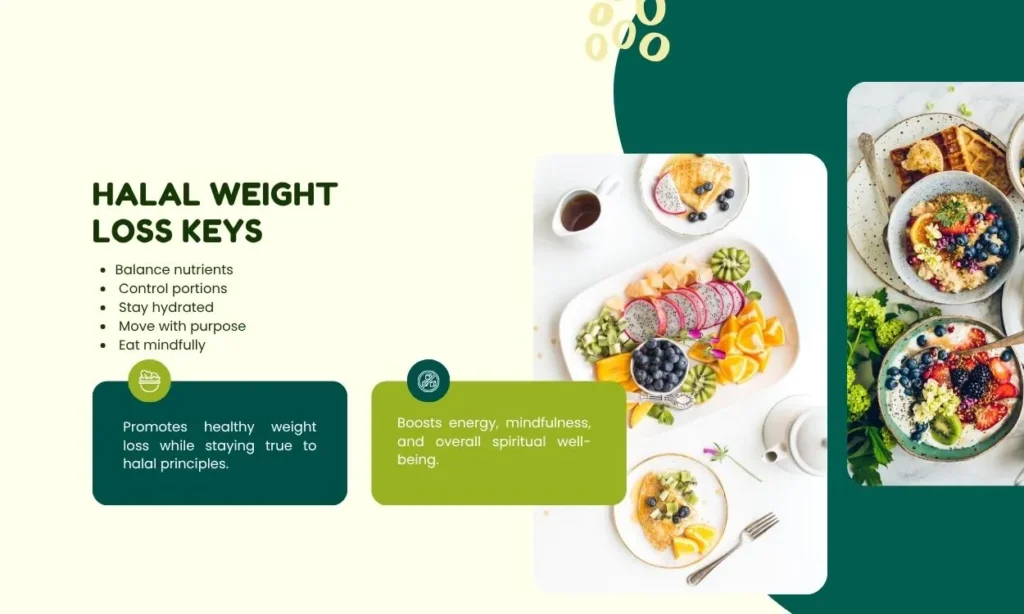
- Balanced macronutrients Combine carbs, protein, and healthy fats.
- Portion control Eat moderately, never until full.
- Hydration Drink water, milk, or honey water.
- Physical activity Stay active in a modest way.
- Mindful eating Follow Sunnah and gratitude practices.
Balanced Macronutrients for Energy and Health
Each meal should provide steady energy through balanced nutrients. Carbohydrates fuel your body, proteins support muscles, and fats regulate hormones. Choose natural halal foods like olive oil, brown rice, and lean meats. This balance keeps you strong without adding unwanted weight. A well-structured halal weight loss diet prevents nutrient gaps and fatigue.
Portion Control for Sustainable Weight Loss
Islam encourages moderation and portion control is its modern reflection. Use smaller plates, chew slowly, and stop before feeling full. This helps prevent both gluttony and guilt. Portioning teaches self-restraint, a key Sunnah trait. With consistent control, your halal weight loss diet becomes sustainable and stress-free.
Proper Hydration and Sunnah Recommended Drinks
Hydration is essential for metabolism and mental clarity. Follow Sunnah by drinking water in three sips while sitting. Other recommended drinks include milk, date water, and honey-infused beverages. Avoid sodas and high-sugar juices that slow progress. Staying hydrated enhances your halal weight loss diet naturally.
Regular Physical Activity Aligned with Modest Muslim Lifestyle
Exercise supports your diet by burning calories and boosting energy. Walking, light jogging, or home workouts can fit easily into a modest routine. You don’t need a gym to stay active; consistency matters more. Even 30 minutes daily can make a difference. Pair movement with dua to make your fitness journey spiritual and empowering.
Mindful and Sunnah-Based Eating Habits
Mindful eating transforms ordinary meals into acts of worship. Sit while eating, start with Bismillah, and thank Allah afterward. The Prophet ﷺ advised filling one-third of your stomach with food, one-third with water, and leaving one-third empty. This naturally supports portion control. Following these Sunnah practices strengthens your halal weight loss diet both physically and spiritually.
7 Day Sample Halal Diet Plan for Weight Loss
| Day | Focus | Example Meals |
| Day 1 | High-Fiber Start | Oats + banana breakfast, lentil soup lunch, mixed salad dinner |
| Day 2 | Lean Protein Focus | Grilled halal chicken, boiled eggs, brown rice, sautéed veggies |
| Day 3 | Balanced Meals | Yogurt with fruit, rice bowl with fish curry, green tea |
| Day 4 | Sunnah-Inspired Fasting | Break fast with dates & soup, light meal with grilled veggies |
| Day 5 | Fresh Fruits & Grains | Smoothie bowl, quinoa salad, handful of mixed nuts |
| Day 6 | Hydrating Meals | Milk + dates breakfast, vegetable stir-fry lunch, fruit-infused water |
| Day 7 | Spiritual Balance | Light meals, herbal tea, reflection and gratitude time |
Tips to Help Muslims Lose Weight the Halal Way
- Track your BMI using South Asian standards.
- Use only halal-certified ingredients.
- Avoid ultra-processed halal snacks.
- Practice gratitude before and after eating.
- Combine daily movement with dua and reflection.
These steps help you stay on track both physically and spiritually. They ensure your halal weight loss diet becomes a consistent lifestyle, not a short term fix.
Spiritual Benefits of a Halal Weight Loss Journey
Choosing halal food is an act of obedience and self-control. It teaches discipline, patience, and mindfulness in daily life. When you nourish your body with halal food, your mind and soul align with peace. This spiritual harmony brings clarity, confidence, and gratitude. The halal weight loss diet is therefore a path toward total well-being not just fitness.
Recommended Islamic Eating and Dietary Practices
- Eat in moderation as the Prophet ﷺ advised.
- Avoid food waste and excess.
- Begin every meal with Bismillah and end with Alhamdulillah.
- Practice fasting for both spiritual and physical purification.
These simple Sunnah habits nurture your soul and strengthen your connection to Allah while maintaining health and energy.
FAQs
Q1: Can Muslims Lose Weight While Following a Halal Diet?
Yes, absolutely. A halal weight loss diet is ideal for healthy and sustainable weight loss because it encourages clean eating, moderation, and spiritual mindfulness. By avoiding haram foods and focusing on whole, halal-certified ingredients, Muslims can lose weight safely. It’s not about restriction but choosing nourishing foods in the right portions. This faith-based approach supports long-term success and aligns perfectly with Islamic values.
Q2: What Are the Best Halal Foods for Weight Loss?
Halal-certified chicken, fish, lentils, chickpeas, and whole grains are excellent for managing weight. Fresh fruits and vegetables add fiber and essential vitamins that keep you full longer. These foods help balance BMI and body fat effectively. South Asian Muslims can adapt traditional dishes by reducing oil and using lean proteins. These small adjustments make your halal weight loss diet more effective and enjoyable.
Q3: How Is BMI Calculated in South Asia, and Why Does It Matter?
BMI = weight (kg) / height (m²). For South Asians, a BMI range of 18.5–23 is considered healthy, as higher values may indicate early risks of obesity-related conditions. Understanding these BMI standards helps track progress more accurately. It ensures your halal weight loss diet remains realistic and safe for your specific body type. Being aware of your BMI helps prevent long-term health issues while maintaining faith-aligned nutrition.
Q4: Is Intermittent Fasting Allowed in Islam for Weight Loss?
Yes, intermittent fasting is permissible when practiced moderately. It shares many similarities with Sunnah fasting and provides both spiritual and physical benefits. This method improves metabolism, promotes detoxification, and builds self-discipline. However, it should not harm your health or replace obligatory Islamic fasts. When combined with a halal weight loss diet, intermittent fasting can lead to excellent and sustainable results.
Q5: How Can I Make Sure Packaged Foods Support a Halal Diet for Weight Loss?
Always check packaging for halal certification and review the nutritional labels carefully. Choose products with minimal ingredients, low sugar, and no artificial additives. Avoid ultra-processed halal-labeled junk foods that offer little nutritional value. It’s best to purchase from trusted halal certified brands. Staying mindful ensures your halal weight loss diet remains pure, effective, and fully compliant with Islamic principles.
Conclusion
A halal weight loss diet isn’t just about losing fat it’s about living with balance, discipline, and intention. When Muslims choose halal, wholesome foods and combine them with active living, they nurture both body and soul. This approach transforms eating into an act of worship, where every bite supports health and faith. By understanding BMI, selecting nutritious halal meals, and practicing mindful eating, anyone can achieve their health goals the halal way. Remember, your journey to a better body starts with the right mindset and every healthy, halal choice brings you closer to both wellness and spiritual fulfillment.