
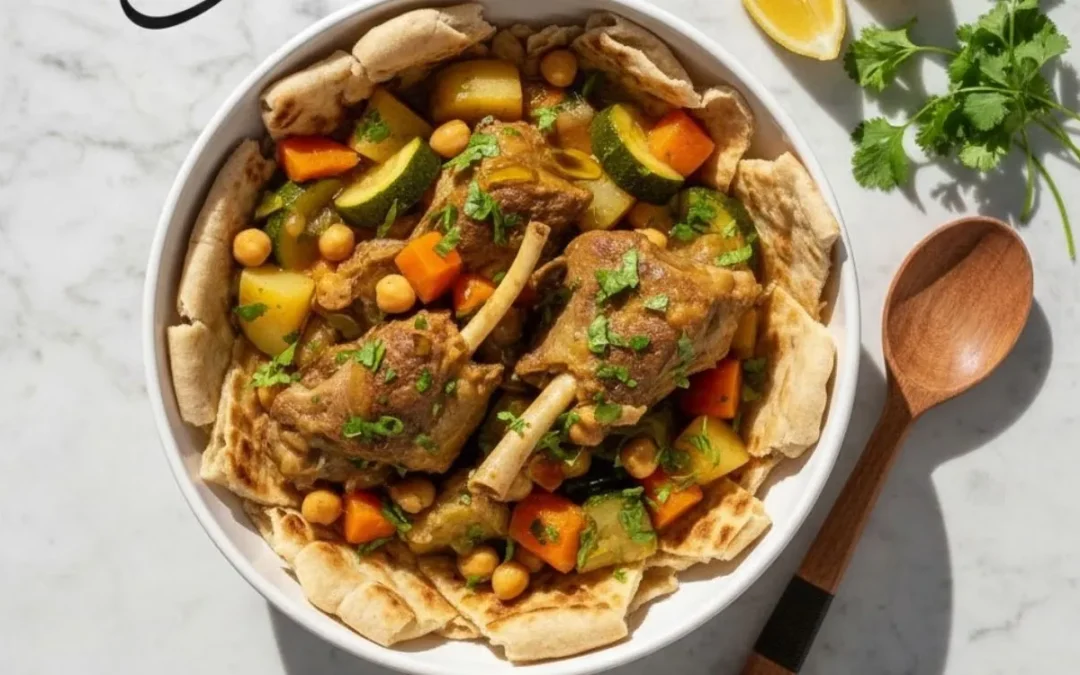
Thareed (الثريد): The Most Honored Dish of the Prophet ﷺ
Introduction: A Sunnah Dish with Timeless Warmth
Thareed (Tharid, الثريد) is more than just a meal it’s a symbol of nourishment, tradition, and barakah (blessing). Among the many foods mentioned in the Sunnah, Thareed holds a unique and elevated place, beloved by the Prophet Muhammad ﷺ himself. It’s a wholesome dish of tender meat, bread, and vegetables, cooked slowly into a hearty stew that satisfies both body and soul. Through its simplicity, Thareed reminds us that true fulfillment lies not in luxury, but in purity, gratitude, and balance.
In our fast-paced modern world, Thareed calls us back to the essence of the Sunnah slowing down, being mindful of what we eat, and appreciating the blessings of Allah. This dish is more than sustenance; it’s an experience of humility and connection. For centuries, Muslims have prepared Thareed to revive prophetic tradition, uniting families and communities over a single shared platter. It takes you on both a spiritual and culinary journey, reminding you to appreciate food not merely as something to eat but as an act of worship.
The Sunnah Connection (Hadith Evidence & Meaning)
Reference: Sunan Ibn Mājah 3280
📖 In-Book Reference: Book 29, Hadith 30
Narrated Abu Musa Al-Ash‘ari (RA):
The Prophet ﷺ said:
“Many men have attained perfection, but no women have attained perfection except Maryam bint ‘Imran and Asiyah, the wife of Fir‘awn. And the superiority of Aisha over other women is like the superiority of Thareed over all other foods.”
This hadith highlights not only the excellence of our mother Aisha (RA) but also the Prophet’s ﷺ love and admiration for Thareed. By comparing her superiority to that of Thareed among foods, the Prophet ﷺ beautifully showed that Thareed represents harmony taste, nourishment, and completeness in one. It was a meal of balance and wholesomeness, symbolizing how faith, like food, is perfected through moderation and gratitude.
This comparison also reflects the Prophet’s ﷺ profound wisdom in everyday metaphors. Food was not merely sustenance for him; it was a reflection of divine balance and natural perfection. Through Thareed, he ﷺ taught us that excellence in any aspect of life whether spiritual, moral, or physical comes through a blend of humility and completeness. Thus, every mention of Thareed in the Sunnah reminds believers to value what is simple yet fulfilling.
What Exactly Is Thareed?
Thareed is a traditional Arabian stew where meat, vegetables, and broth are poured over broken bread typically barley or wheat creating a comforting, flavorful meal. The bread absorbs the juices, forming a hearty texture that’s both light and satisfying. It’s a complete meal rich in flavor and nutrients, perfectly suited to desert climates and physically demanding lives. The dish was a staple among the Sahabah (Companions), nourishing them with balance and simplicity.
Culturally, Thareed represents hospitality and togetherness. It’s traditionally served on a large platter so everyone can eat from one dish a practice that fosters unity, love, and equality at the table. Across the Middle East, variations of Thareed still appear in homes during Ramadan and family gatherings. This dish’s continued popularity shows how deeply Sunnah foods connect the past to the present offering not just taste, but spiritual nostalgia and gratitude.
Benefits of Thareed
Thareed isn’t merely delicious; it’s a masterpiece of prophetic simplicity and nutrition. Combining bread, meat, and vegetables, it provides a balance of macro- and micronutrients in every spoonful. Its slow-cooked process ensures that every element from the broth to the bread delivers maximum nourishment and digestibility.
Ibn Al-Qayyim (RA) beautifully summarized it: “Thareed is composed of bread, which is the best of foods, and meat, which is the best of flavoring. When these two are combined, no other food can surpass them.”
In an age of processed meals and rushed diets, Thareed stands as a timeless lesson in balanced nutrition. It exemplifies how simple ingredients can yield profound benefits when prepared with patience and care. Below are its key benefits as recognized through the Sunnah and supported by modern nutritional science.
Easy to Digest & Gentle on the Stomach
The slow cooking of Thareed makes the meat tender and its broth light, allowing nutrients to be absorbed easily. The soaked bread further softens the dish, making it perfect for those with sensitive digestion. It’s a food that comforts the body without straining it ideal for suhoor, iftar, or recovery after illness.
This digestibility was among the reasons the Prophet ﷺ admired Thareed. Unlike heavy or fried foods, it nourishes without burdening the stomach. The slow release of nutrients keeps energy steady, and its high water content ensures hydration. It’s a reminder that the best foods are those that strengthen and heal gently.
Rich in Collagen & Minerals
Cooking meat on the bone releases collagen and gelatin into the broth, supporting joint, skin, and gut health. These natural compounds are essential for elasticity, repair, and digestion. Thareed, therefore, doubles as an ancient “superfood,” rich in minerals like calcium, phosphorus, and magnesium long before modern nutrition understood their value.
The addition of squash or gourd another food loved by the Prophet ﷺ enhances its healing quality. These vegetables contribute vitamins A and C, supporting the immune system and reducing inflammation. Together, these ingredients make Thareed a restorative meal that nourishes from the inside out.
High in Nutrient Density
Every component of Thareed contributes something essential: protein from meat, complex carbohydrates from bread, and antioxidants from vegetables. It’s a naturally balanced meal that meets the body’s energy needs while maintaining steady blood sugar. Unlike refined or processed foods, Thareed sustains fullness and vitality.
In modern nutritional terms, Thareed offers the perfect trifecta energy, strength, and recovery. It provides macro- and micronutrients in a single dish, minimizing waste and maximizing nourishment. It embodies the Sunnah principle of “moderation in all things,” offering health without excess.
A Perfectly Balanced Meal
Thareed reflects balance in flavor, texture, and nutritional composition. Bread gives energy, meat provides strength, and vegetables bring fiber and vitality. It’s not just a food for the body but for the soul, reminding us to eat mindfully and thank Allah for every blessing.
As a Sunnah dish, it inspires us to adopt moderation and gratitude. Eating Thareed encourages reflection on how simplicity leads to true contentment. It reminds us that what the Prophet ﷺ loved was not extravagance but completeness the perfect harmony between nourishment, humility, and barakah.
Recipe: How to Make Sunnah Thareed
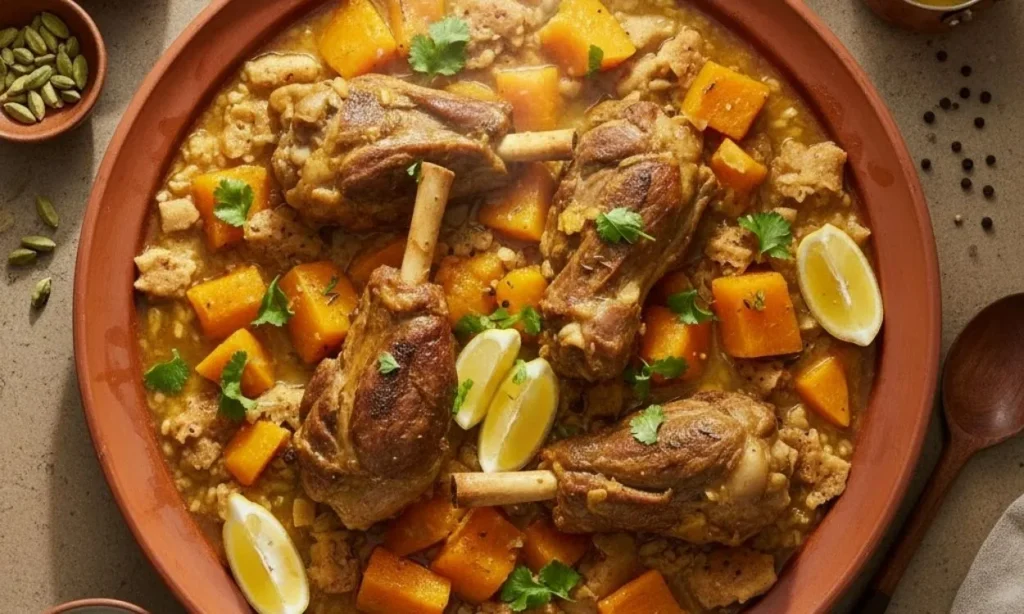
Ingredients:
- 1 lb meat with bones (lamb, goat, veal, beef, or chicken)
- 1 small onion, finely chopped
- 2 cups gourd or butternut squash, peeled and chopped
- ½ tsp allspice or garam masala
- 1 tbsp salt (to taste)
- ½ tsp black pepper or chili
- 5–7 cardamom pods, 1-inch cinnamon stick, 1 bay leaf
- 3 tbsp ghee or oil
- 5–7 cups water
- Barley or wheat bread, torn into pieces
- Garnish: coriander and lemon juice
Method:
- Heat ghee and sauté onions until golden.
- Add meat; brown for 5–7 minutes.
- Stir in spices, add water, and bring to a boil.
- Simmer 90 minutes (or 4 hours slow cook) until tender.
- Add gourd and cook another 30 minutes.
- Tear bread into a platter, pour broth, and let it soak.
- Top with meat and garnish with coriander and lemon.
Cooking Thareed is an act of mindfulness. Each stage from browning the meat to pouring the broth teaches patience and gratitude. As the aroma fills the home, it connects the heart to the Sunnah and revives the tradition of cooking with intention. It’s a recipe not just for the body, but for the heart.
Serving Ideas, Variations & Make-Ahead Tips
People serve Thareed hot and share it from one platter to promote unity and love among everyone who eats. It pairs beautifully with laban (buttermilk), dates, or mint tea, creating a wholesome Sunnah-inspired meal. For gatherings, garnish with fresh herbs and lemon for brightness.
For variations, try chicken for a lighter version or add root vegetables for depth. Thareed can be prepared a day ahead; it tastes even richer as flavors meld overnight. This make-ahead quality reflects prophetic foresight to prepare, share, and plan with wisdom and care.
Reflection: The Beauty of Simplicity
Thareed stands as a lesson in humility and gratitude. The Prophet ﷺ loved it not for luxury, but for its perfection in simplicity. It embodies balance flavorful yet gentle, nourishing yet light. Through Thareed, we are reminded that the best meals are those made with sincerity, eaten with remembrance, and shared in kindness.
In an age of excess, Thareed invites us back to mindfulness and simplicity. It urges us to slow down, cook with patience, and eat with gratitude. Each bite reminds you to engage in dhikr and recognize that true blessings come through moderation and gratitude.
FAQs
Q1: Is Thareed still popular today?
Yes, Thareed remains beloved in the Arabian Peninsula, especially in Saudi Arabia, Yemen, and the UAE. Families often prepare Thareed during Ramadan and Eid, connecting their modern tables to the prophetic traditions.
Q2: What bread is best?
Barley flatbread is traditional, but whole wheat or tandoori roti works well too. The bread should be firm enough to soak the broth without turning mushy.
Q3: Can Thareed be vegetarian?
Yes. Replace meat with lentils, chickpeas, or mushrooms for a plant-based version while keeping the core Sunnah balance of broth and bread.
Q4: Why did the Prophet ﷺ love Thareed?
Because it represented perfection combining taste, texture, and nourishment much like Aisha (RA) combined excellence in faith, knowledge, and virtue.
Conclusion
Thareed is more than a dish it’s a Sunnah legacy of nourishment, balance, and barakah. It embodies everything Islam teaches about food: moderation, gratitude, and community. When we cook and share Thareed today, we revive a piece of prophetic tradition that brings both health and spiritual warmth.
In every spoonful, there’s history, love, and light a reminder that the simplest foods can hold the greatest blessings. Truly, the superiority of Thareed among foods mirrors the timeless excellence of the Sunnah itself complete, wholesome, and filled with barakah.